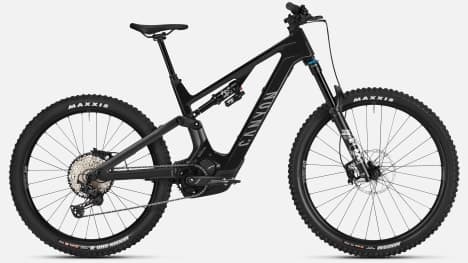
In Tbilisi an electric bike is the one type that genuinely replaces a car: the hill stops being a barrier and you arrive at work without sweating. Below we work through the three parameters that decide everything: battery capacity, motor type and motor power.
01
Battery and real-world range
Battery capacity is measured in watt-hours (Wh) and it sets how far you can go. But the range a manufacturer quotes is almost always measured in ideal conditions: flat road, light rider, minimum assist, warm weather.
In practice range depends on terrain, rider weight, tyre pressure, wind and above all on the assist mode. On the same battery you will cover two to three times less distance in Turbo than in Eco.
The ranges below reflect realistic expectations on mixed terrain. On Tbilisi gradients it is sensible to plan around the lower figure.
Real-world range by battery and assist mode
Table: batteries from 400 to 750 Wh in Eco, Tour and Turbo modes, range in kilometres.
02
Mid-drive or hub motor
There are two main layouts, and the difference is obvious from the first ride.
A mid-drive motor sits at the bottom bracket and delivers power through the chain. Weight is carried centrally and low, so the balance stays natural. It works with the gears, which makes it more effective on steep climbs. Bosch, Shimano Steps, Yamaha and Giant SyncDrive are all of this type.
A hub motor is built into the rear or front wheel axle. The design is simpler and cheaper, and it works well on flat city routes. The downside: weight is concentrated at one end, and on a long steep climb the motor heats up faster.
Criterion
Mid-drive
Hub motor
Balance
Natural, weight centred
Weight at one end
Steep climbs
Effective, works with gears
Fades, heats up
Price
Higher
More affordable
Chain wear
Faster
Normal
Servicing
Specialist
Simple
Best for
Mountains, Tbilisi terrain
Flat city routes
Mid-drive versus hub motor
03
250W or 500W - what power actually means
This is one of the most common questions, and the answer has a technical half and a legal half.
The European standard EN 15194 defines a pedelec: 250 W nominal power, assistance only while pedalling, and up to 25 km/h. A bike within those limits counts as an ordinary bicycle in the EU. Models of 500 W and above are widely sold, but they fall outside that standard.
Important: the legal position varies by country and changes over time. If you are considering a model above 250 W, check the current local requirements on registration, minimum age and helmets before you buy.
Practically: watts measure power, but torque (Nm) is what you feel. For city riding 40-50 Nm is enough; for steep Tbilisi climbs and mountains, 65-85 Nm is better. A good 250 W mid-drive with 75 Nm will climb considerably better than a cheap 500 W hub motor.
04
What an electric bike costs
Most of the price of an electric bike sits in two components: the motor and the battery. That is why the gap between a 2,500 GEL model and an 8,000 GEL one is wider than on conventional bikes.
Budget
What you get
Best for
2,500 - 4,000 GEL
Hub motor, 360-400 Wh, basic components
Flat city routes
4,000 - 7,000 GEL
Mid-drive, 400-500 Wh, hydraulic brakes
Daily commuting, Tbilisi terrain
7,000 - 12,000 GEL
Bosch/Shimano, 500-625 Wh, quality suspension
Serious use, touring
12,000 GEL and up
Full-suspension e-MTB, 625-750 Wh
Mountains, trail
Price bands and what they buy
05
Battery care - what extends its life
Do not leave it fully flat. Long storage at 0% is the worst thing for a lithium-ion battery. If the bike will sit unused, charge it to 40-60% first.
Store it indoors in winter. Cold temporarily reduces capacity, and prolonged frost damages the cells permanently. Below -5 °C, do not leave the battery on the bike.
Use the original charger. The wrong voltage damages the controller and voids the warranty.
Little and often. Frequent partial charges (20-80%) preserve the battery better than rare full cycles.
A lithium-ion battery typically holds up for 500-1,000 full cycles, after which capacity gradually declines. Cared for properly, that is several years of service.
06
What to check when buying
Hydraulic brakes, without exception. An electric bike weighs 22-27 kg and travels faster, so the braking system is asked to do more than on a conventional bike.
The battery should be removable. Without a lift, or above the ground floor, carrying 25 kg upstairs daily is not realistic. A removable battery for charging indoors is essential.
Frame weight limit. Electric bikes typically carry a combined limit of 120-140 kg including luggage.
Service availability. Diagnostics and spares for Bosch, Shimano and Yamaha systems are far easier to obtain than for unknown brands.
Separate battery warranty. Frame and battery warranties often differ in length - check them separately.
07
Who it suits, and who it does not
Worth it if you ride more than 5 km daily, have to climb Tbilisi gradients, do not want to arrive at work sweating, or need to reduce physical load for health reasons.
Not worth it if you mainly ride for fitness - a conventional mountain or road bike will give you far better components for the same money. Likewise if you must carry the bike into a flat and the battery is not removable: 25 kg every day is hard work.
Checklist: what to verify before you buy
Motor type: mid-drive for mountains and Tbilisi terrain, hub for flat city riding.
Torque (Nm), not just watts: 40-50 Nm for the city, 65-85 Nm for climbs.
Battery capacity (Wh) covers twice your daily route.
The battery is removable and can be charged indoors.
Hydraulic disc brakes fitted.
The motor brand is established and serviceable.
Warranty stated separately for frame and battery.
For models above 250 W, local requirements have been checked.
Terminology
Pedelec
An electric bike where the motor assists only while you pedal. EN 15194: 250 W, up to 25 km/h.
Wh (watt-hour)
Battery capacity. More capacity means more range; 500 Wh is around the middle.
Nm (newton metre)
Torque. On a climb it matters more than watts.
Mid-drive
A motor at the bottom bracket. Natural balance, efficient climbing.
Hub motor
A motor built into the wheel axle. Simpler and cheaper, suited to flat routes.
Throttle
A twist grip that drives the motor without pedalling. Not part of the pedelec standard.
Range
Distance on one charge. Depends on assist mode, terrain and rider weight.
Frequently asked questions
How far does an electric bike go on one charge?
In mixed use a 500 Wh battery typically covers 50-100 km. In Eco on flat roads the figure is higher; in Turbo and on climbs it is considerably lower. On Tbilisi terrain, plan around the lower end.
Should I choose 250W or 500W?
250 W is the European pedelec standard (EN 15194) and is enough for most city and mountain use, provided torque is above 65 Nm. 500 W models exist but fall outside the standard - check local requirements before buying. On a climb, motor type and Nm decide more than watts.
How long does the battery last?
A lithium-ion battery typically holds up for 500-1,000 full charge cycles, after which capacity gradually declines. With sensible care - partial charges, indoor storage in winter - that is several years of service.
Can I ride in the rain?
Yes. Most electric bikes carry IPX4 protection or better and cope with rain. Do not submerge the bike or use a pressure washer, though - water can reach the contacts.
What does an electric bike cost in Georgia?
Entry models with a hub motor start at 2,500-4,000 GEL. Mid-drive with decent components runs 4,000-7,000 GEL. Bosch or Shimano systems 7,000-12,000 GEL. Full-suspension e-MTB from 12,000 GEL.
Can I buy an electric bike on finance?
Yes. TBC and BOG offer 0% finance from 3 to 24 months. A 6,000 GEL bike over 24 months works out at roughly 250 GEL a month with nothing added.
Do I still have to pedal?
On a pedelec, yes - the motor only assists while you are pedalling. The exercise remains, the effort simply drops sharply. Some models have a throttle, but that falls outside the pedelec standard.
How much does an electric bike weigh?
Typically 22-27 kg, roughly double a conventional bike. That is exactly why a removable battery matters if you have to carry the bike into a flat.